
Start with the route
Position cameras where useful events are most likely to happen
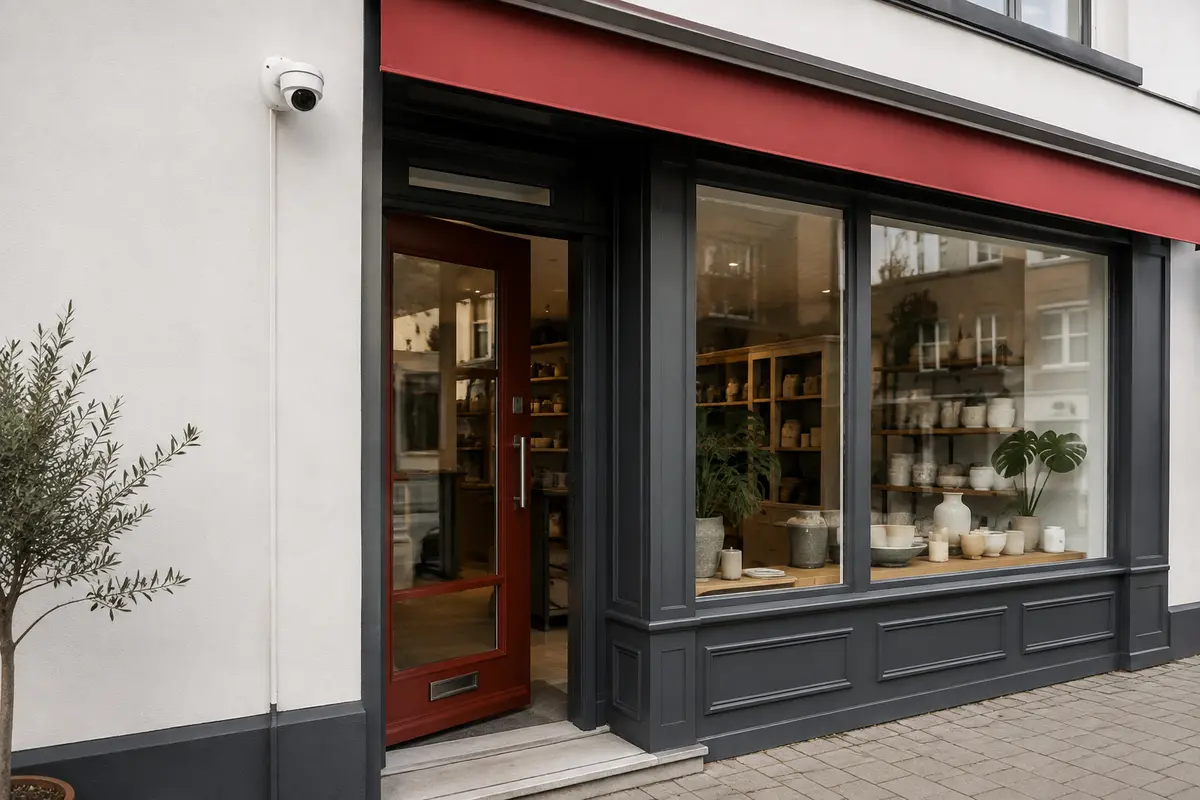
Do not begin by asking which blank wall can hold a camera. Begin with the route a person or vehicle would use and what you would need to see if an incident occurred. The most useful domestic and small-business positions commonly include:
- The principal entrance and the approach immediately before it
- A driveway, gate or vehicle route where arrival and departure matter
- Rear doors, garden gates, service yards and other less visible access points
- Narrow side passages that cannot be covered clearly from the front or rear
- Garages, outbuildings, stock access and other areas containing valuable assets
- Customer, staff or delivery entrances at commercial premises
One camera may cover two nearby objectives when the angle and distance are suitable. If combining the views makes both subjects too small, causes one to be backlit or leaves an obstruction in the scene, separate cameras may be the better design.
Plan for evidence
Overview footage and identification footage are different
A broad image can show that someone crossed a garden, but it may not capture enough facial or clothing detail to help identify them. A focused entrance view may show useful detail but cannot describe everything happening across the wider property. Define the job of each camera before setting the field of view.
| Objective | What the view should achieve | Typical example |
|---|---|---|
| Identify | Capture enough detail to help establish who the person is | A controlled entrance approach |
| Recognise | Help establish whether the person is someone already known | A gate or reception approach |
| Observe | Show clothing, direction and behaviour within an area | A garden, shop floor or loading space |
| Monitor | Provide a general picture of activity across a wider scene | A yard or car park overview |
Police crime-prevention guidance recommends positioning cameras to obtain good-quality facial images while keeping them out of easy reach. See the current West Yorkshire Police CCTV and alarms guidance for further practical advice.
Test the difficult conditions
Plan the position for night, rain and real lighting
Avoid strong backlighting. A bright doorway, streetlight or sunrise behind a subject can make the person appear dark even when the overall scene looks well exposed.
Allow for infrared reflection. Nearby soffits, walls, drainpipes and foliage can reflect infrared light back into the lens and reduce the useful night image.
Consider headlights. Vehicle lights can overwhelm a poorly planned driveway view or make a number plate difficult to capture.
Protect the lens. Exposure to rain, dirt, cobwebs and vegetation can slowly damage the image even when the camera remains operational.
Test the final scene. Review recorded footage in daylight and darkness rather than accepting a live installation image at one convenient time of day.
Keep the view proportionate
Think about neighbours, public areas and data protection
Where possible, position a home camera so it covers the area you are protecting without unnecessarily recording a neighbour's windows, garden or a wide section of public space. A narrower field of view, different angle or privacy masking may reduce intrusion without undermining the security aim.
The ICO explains that additional responsibilities can apply when domestic CCTV captures people beyond the boundary of the home. Signage, handling recordings fairly and responding to information requests may become relevant. Read the latest ICO home CCTV guidance before operating the system. Business CCTV is subject to wider data-protection duties and should be planned accordingly.
This section is general information, not legal advice. Official guidance can change, so check the current ICO position for your exact circumstances.
What to avoid
Seven common CCTV positioning mistakes
- Mounting every camera as high as possible and losing useful facial angles
- Using one very wide view when a specific entrance needs identification detail
- Allowing a porch roof, gutter, open door or parked vehicle to block the subject
- Aiming through glass and expecting reliable infrared performance at night
- Ignoring seasonal foliage, growing hedges and changing sunlight
- Recording unnecessary neighbouring or public areas without considering privacy
- Failing to review recorded footage after the final camera settings are applied
Nationwide installation
Mounting challenges differ across UK cities
Property type matters more than a postcode label, but recurring building patterns do shape camera positions. London and Edinburgh flats may have shared entrances or external mounting restrictions. Leeds, Bradford and Sheffield terraces can have long rear approaches or side alleys. Birmingham, Manchester and Glasgow commercial units may need customer, yard and delivery views considered separately.
Urban homes and flats
Shared boundaries and close neighbouring buildings make focused views and privacy especially important.
Terraces and suburban homes
Rear access, driveways and side passages often need separate consideration.
Shops and commercial sites
Customer flow, stock access, yards and staff-only areas each need a clear purpose and proportionate view.
Common questions
CCTV camera positioning FAQs
How high should an external CCTV camera be installed?
There is no universal height for every scene. It should be difficult to tamper with while still providing the angle and image detail needed for the intended view. Mounting too high can leave you with mainly the tops of heads rather than useful facial detail.
Should a camera point directly at the front door?
The main entrance is often a priority, but the best position is the one that captures a useful approach and face angle without being defeated by backlighting, the open door, a porch roof or another obstruction.
Can home CCTV record the pavement or a neighbour's property?
Where domestic CCTV captures people outside your private boundary, data-protection responsibilities can apply. Aim cameras at the relevant private area, restrict unnecessary coverage and check the latest ICO guidance before operating the system.
Is it better to hide CCTV cameras?
Visible cameras can contribute to deterrence, while the chosen position still needs to produce useful footage and resist tampering. The right balance depends on the property and security objective; simply hiding a camera does not make the recorded image useful.
Can one wide-angle camera cover the whole garden?
It may provide a broad overview, but a wider scene can reduce the pixel detail available on a person or object. If identification matters at a particular gate or door, a more focused camera view may be needed as well.